The World Often Misunderstands Quiet Genius
History tends to celebrate charisma loudly.
But many of the individuals who changed civilization were not socially dominant personalities. They were obsessive thinkers who disappeared into ideas long enough to reshape reality itself.
Nikola Tesla was one of those people.
Tesla did not build his success through popularity, political networking, or emotional persuasion. His blueprint was far more unusual and far more powerful.
He relied on:
- extreme mental visualization,
- deep isolation,
- obsessive focus,
- long-term vision,
- and an almost superhuman ability to concentrate.
Modern psychology would likely describe Tesla as operating with extraordinary levels of intrinsic motivation, cognitive persistence, and visual-spatial intelligence (Simonton, 1999).
But to the outside world?
He often appeared eccentric, detached, and socially distant.
And that may have been part of the reason he succeeded.
Tesla’s First Advantage: Solitude Without Psychological Collapse
Most people experience prolonged solitude as emotional discomfort.
Tesla experienced it as amplification.
Biographers repeatedly documented Tesla’s preference for isolation during periods of intense invention and experimentation (Cheney, 1981). Unlike many people who require constant external stimulation, Tesla appeared capable of generating enormous psychological energy internally.
This matters more than most people realize.
Research on creativity consistently shows that uninterrupted concentration improves problem-solving and the quality of innovation (Csikszentmihalyi, 1996).
Tesla understood something modern society often forgets:
Constant interruption weakens deep thinking.
His solitude was not loneliness.
It was cognitive protection.
Tesla’s Second Advantage: Mental Simulation
Perhaps Tesla’s most remarkable ability was his use of visualization.
According to historical accounts, Tesla often designed inventions entirely in his mind before physically building them. He mentally tested machines, corrected flaws, and refined systems internally (Seifer, 1996).
This resembles what modern cognitive science calls mental simulation, the brain’s ability to rehearse outcomes internally before action occurs.
Elite athletes use it.
Military strategists use it.
High-level performers use it.
Tesla used it obsessively.
He once claimed he could run inventions in his mind “for weeks” and detect weaknesses before construction.
That ability dramatically reduced wasted motion.
While others experimented physically, Tesla experimented cognitively first.
Tesla’s Third Advantage: Obsession Over Balance
Modern culture glorifies “balance.”
Tesla glorified mastery.
His life demonstrates a controversial truth:
Extreme achievement often comes from disproportionate focus.
Psychologist Anders Ericsson’s research on expertise found that elite performance typically emerges from deliberate practice, repetition, and sustained cognitive immersion, rather than casual interest (Ericsson et al., 1993).
Tesla embodied this completely.
He worked compulsively, slept minimally during invention periods, and immersed himself fully in intellectual pursuits.
This level of obsession came with costs:
- social isolation,
- emotional strain,
- financial instability,
- and deteriorating health later in life.
But it also produced world-changing innovation.
Tesla’s Fourth Advantage: Future-Oriented Thinking
Tesla was rarely building for the present moment.
He was building for civilizations that did not yet exist.
This future-oriented cognition separated him from many contemporaries. While others focused on immediate commercialization, Tesla envisioned wireless communication, renewable energy concepts, remote-control systems, and a global technological infrastructure decades ahead of widespread adoption.
This reflects what psychologists sometimes call prospection, the mental ability to simulate future possibilities and long-term outcomes (Seligman et al., 2013).
Tesla lived psychologically in the future long before society arrived there physically.
The Hidden Cost of Tesla’s Genius
There is a tendency to romanticize genius while ignoring its psychological burden.
Tesla’s extreme cognitive intensity appears to have contributed to:
- compulsive tendencies,
- interpersonal difficulties,
- perfectionism,
- and social withdrawal.
Many visionary personalities struggle because their internal world becomes more compelling than ordinary life.
That is both the strength, and danger, of obsessive intelligence.
The Blueprint for Modern Strategic Thinkers
Tesla’s life reveals several principles modern thinkers can apply:
1. Protect uninterrupted thinking time
Innovation requires cognitive space.
2. Visualize before acting
Mental simulation reduces unnecessary failure.
3. Obsession often outperforms moderation
Mastery requires depth, not scattered attention.
4. Think beyond immediate trends
Long-term vision creates asymmetric advantages.
5. Solitude can become strategic
Isolation is dangerous only when purposeless.
Nikola Tesla did not succeed because he fit comfortably into society.
He succeeded because he developed the ability to think independently of it.
And in a distracted world increasingly addicted to speed, noise, and superficiality, Tesla’s blueprint may matter now more than ever.
–American Academy of Advanced Thinking & OpenAI
__________________________________________
References
Cheney, M. (1981). Tesla: Man out of time. Prentice-Hall.
Csikszentmihalyi, M. (1996). Creativity: Flow and the psychology of discovery and invention. HarperCollins.
Ericsson, K. A., Krampe, R. T., & Tesch‐Römer, C. (1993). The role of deliberate practice in the acquisition of expert performance. Psychological Review, 100(3), 363–406. https://doi.org/10.1037/0033-295X.100.3.363
Seifer, M. J. (1996). Wizard: The life and times of Nikola Tesla. Citadel Press.
Seligman, M. E. P., Railton, P., Baumeister, R. F., & Sripada, C. (2013). Navigating into the future or driven by the past. Perspectives on Psychological Science, 8(2), 119–141. https://doi.org/10.1177/1745691612474317
Simonton, D. K. (1999). Origins of genius: Darwinian perspectives on creativity. Oxford University Press.
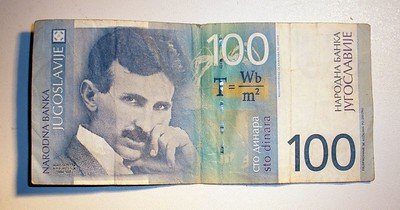
Image: “100 Dinars” by Arenamontanus is licensed under CC BY 2.0.